About / Budiman Utomo
Meet me,
person who always curious.
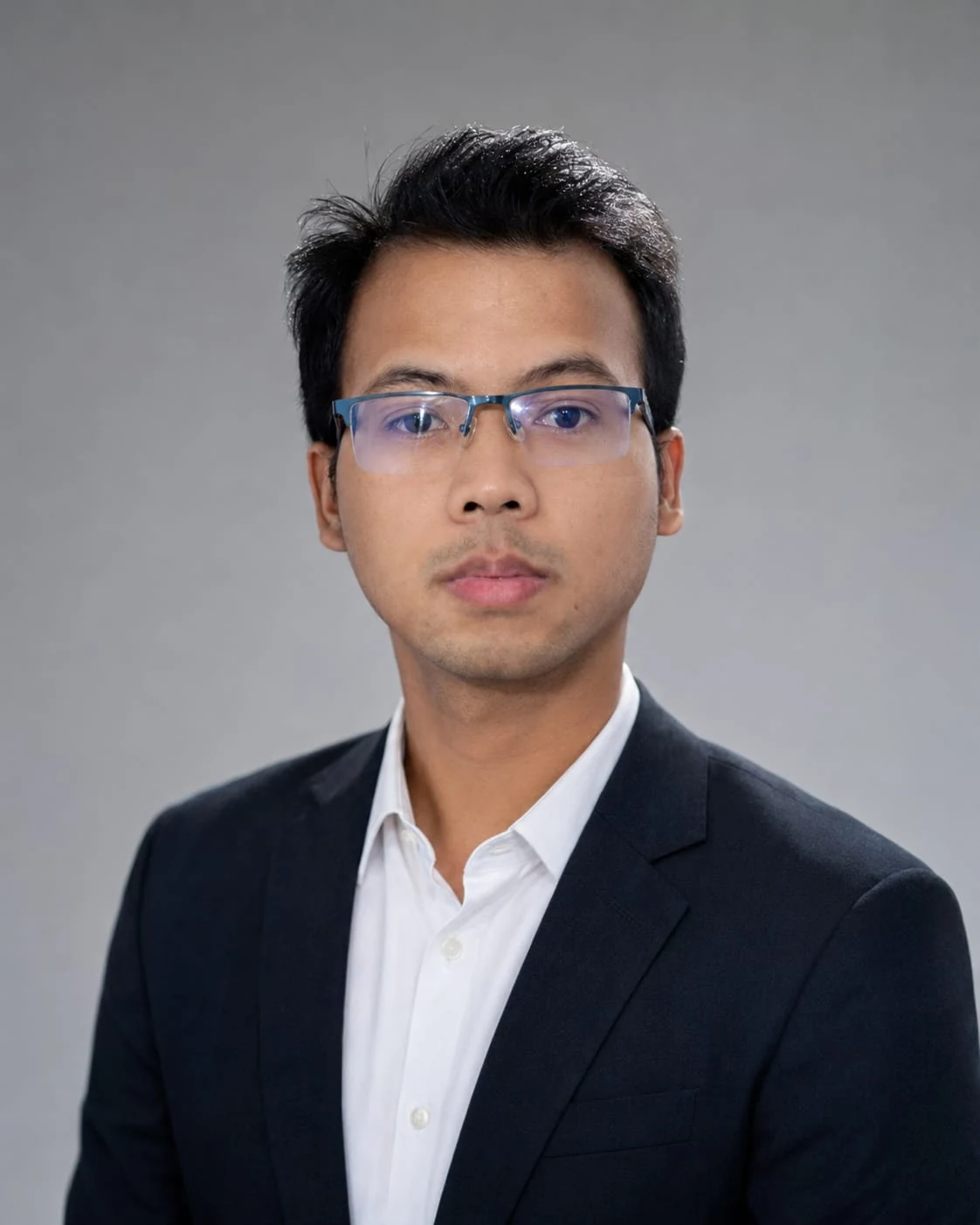
Hello, welcome to my website. My name is Budiman. I have a bachelor’s degree in Aerospace and Aeronautics Engineering, and I graduated from Bandung Institute of Technology (ITB).
I really love anything related to science, especially physics and mathematics, and I always like to deep dive into them. That’s why I chose ITB, especially Aerospace Engineering. At that time, I felt like aerospace technology—aircraft, rockets, and satellites—was the peak of human science and engineering.
Beginnings
in flight
Learning to build
something.
During college, I joined Aksantara, a UAV student activity unit. I joined Aksantara as part of the propulsion department from 2021 to 2023. During that time, our team developed an efficient variable-pitch propeller mechanism and won 2nd place in a national UAV competition. That was a great experience.
I also joined the Aero-Propulsion Lab, and my thesis research was about ammonia-hydrogen-nitrogen swirling combustion. This was a joint research project between Mitsubishi Heavy Industries (MHI) Japan and ITB. I knew nothing about combustion when I decided to join this research. We had a great team there, consisting of supervisors, undergraduate students, master’s students, and PhD students. We worked together to research the potential of ammonia-based fuel as an alternative green energy source.
My thesis specifically focused on combustion simulation. Here, I investigated the effects of Reynolds number, equivalence ratio, ammonia fraction, and swirl number on NO production and combustion stability. In my research, I found that peak NO occurred when the equivalence ratio was around 0.85, regardless of the other parameters. Reynolds number and ammonia fraction also significantly influenced NO production across different swirl numbers and equivalence ratios.
Overall, this was one of the best experiences of my last year at ITB. I learned a lot about combustion phenomena, chemical reactions, and advanced physics and mathematics because my thesis involved numerical simulation.
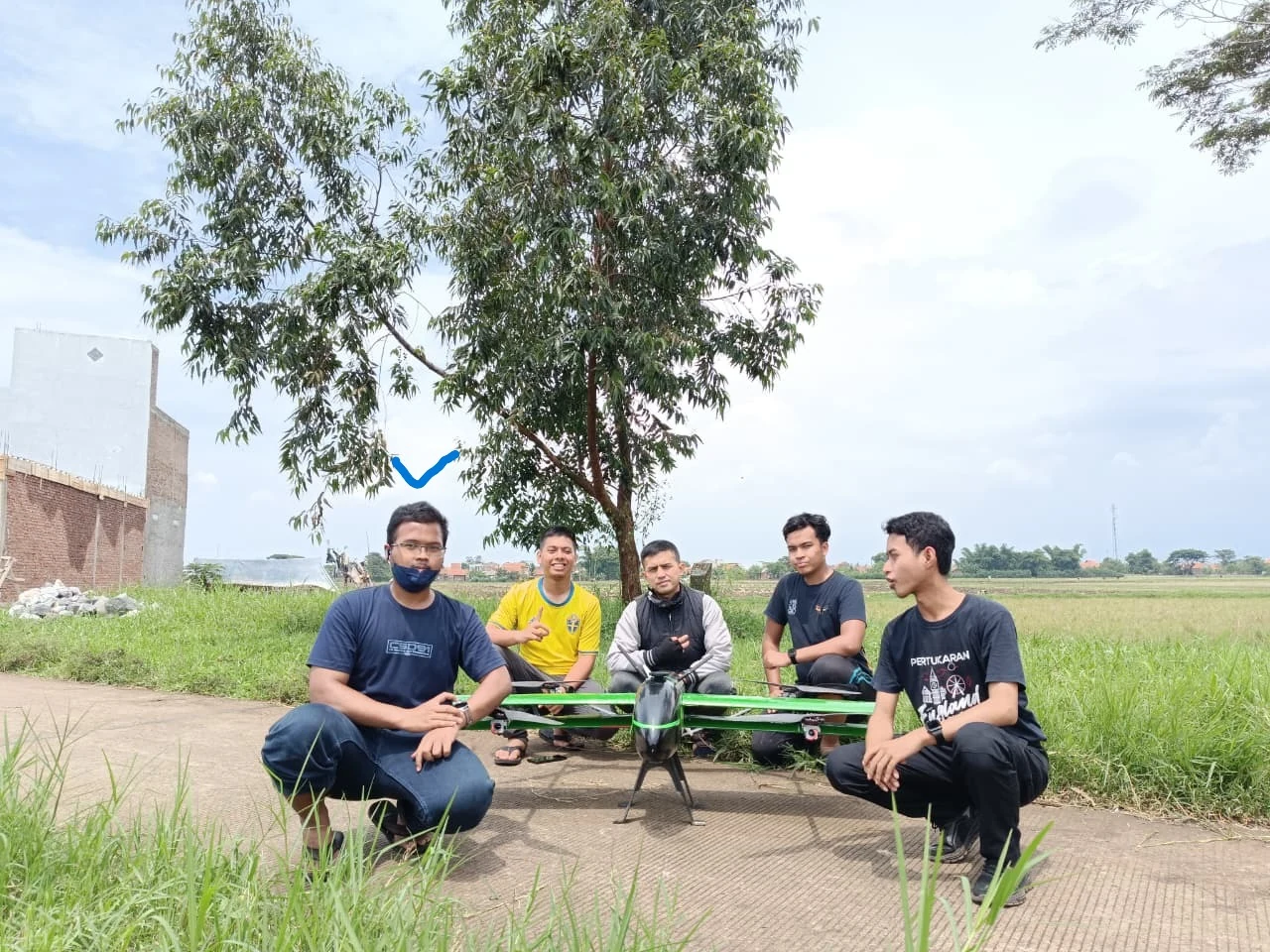
Agricultural-drone development during flight-test work. The blue mark identifies me.
Engineering
in practice
My previous job
and experiences.
After graduating in 2024, I worked at Intercrus Aero Indonesia as an aeropropulsion engineer from 2024 to early 2026. Overall, I really enjoyed working there. My work was related to low-noise propeller design for eVTOL aircraft. The challenges were significant, ranging from analytical calculations and preliminary design to CAD, high-fidelity CFD, and optimization. I had to choose optimized airfoils, optimize the blade shape, and work through many other design considerations.
In the end, I completed the design and produced a three-blade low-noise propeller design with a noise level of less than 65 dB at a distance of 100 m, more than 100 times quieter than a helicopter. At the same time, I also joined another team as an aerodynamics engineer, where we developed an agricultural drone. We successfully flight-tested our 1:2-scale agricultural drone in November 2024, and it was a great experience.
Current
directions
Expanding the
and connecting fields.
Currently, I work as a freelance machine learning engineer, participate in HALE research as an aerodynamics and propulsion engineer, work as a math and physics tutor for first-year ITB students, and am still involved in the MHI ammonia research. I am also learning computer science because I have a goal of continuing my master’s degree in computer science. Basically, I’m still undecided about whether I want to pursue a master’s degree in aerospace or CS.
But why CS? Yeah, I have my own reasons.
In aerospace engineering, computer science has only been adopted to a limited extent. Some of the most advanced research in this field likely focuses on areas such as shape optimization and reduced-order modeling for CFD. Yet, these technologies have the potential to accelerate many other tasks, such as inspection and maintenance.
I aim to study computer science—specifically AI and machine learning—so that I can apply these technologies more extensively within the aerospace industry. In aerospace, precision and speed are critical factors, influencing everything from corporate profitability to the most vital aspect of all: human lives. One of my visions is to advance the industry by adopting these emerging technologies.
I think that’s all—a brief story and introduction from me, haha.
Outside the work
Repetition,
discipline, progress.
Ah, my hobbies?
My head is full of questions about nature. The universe is a fascinating place and subject to think about, especially since we live in it.
Take a simple example: imagine a beautiful flower. Without science, I might just picture an ordinary flower, perhaps yellow, pink, or violet. But science allows me to imagine far beyond that. I can visualize the flower’s internal structure, its cells, and the intricate processes within, which, to me, are beautiful in their own right.
It is not merely about macroscopic beauty, but microscopic beauty as well. The fact that flowers evolved specific colors to attract insects for pollination is fascinating, as it implies that insects, too, can perceive color. Does this extraordinary beauty and interdependence exist in other structures as well?
This is precisely where science becomes so compelling: it broadens our perspective on the beauty of the universe.
That is also why I love hiking. It allows me to observe the natural world more clearly.
So, yeah, I think my hobbies are observing, thinking, and hiking.
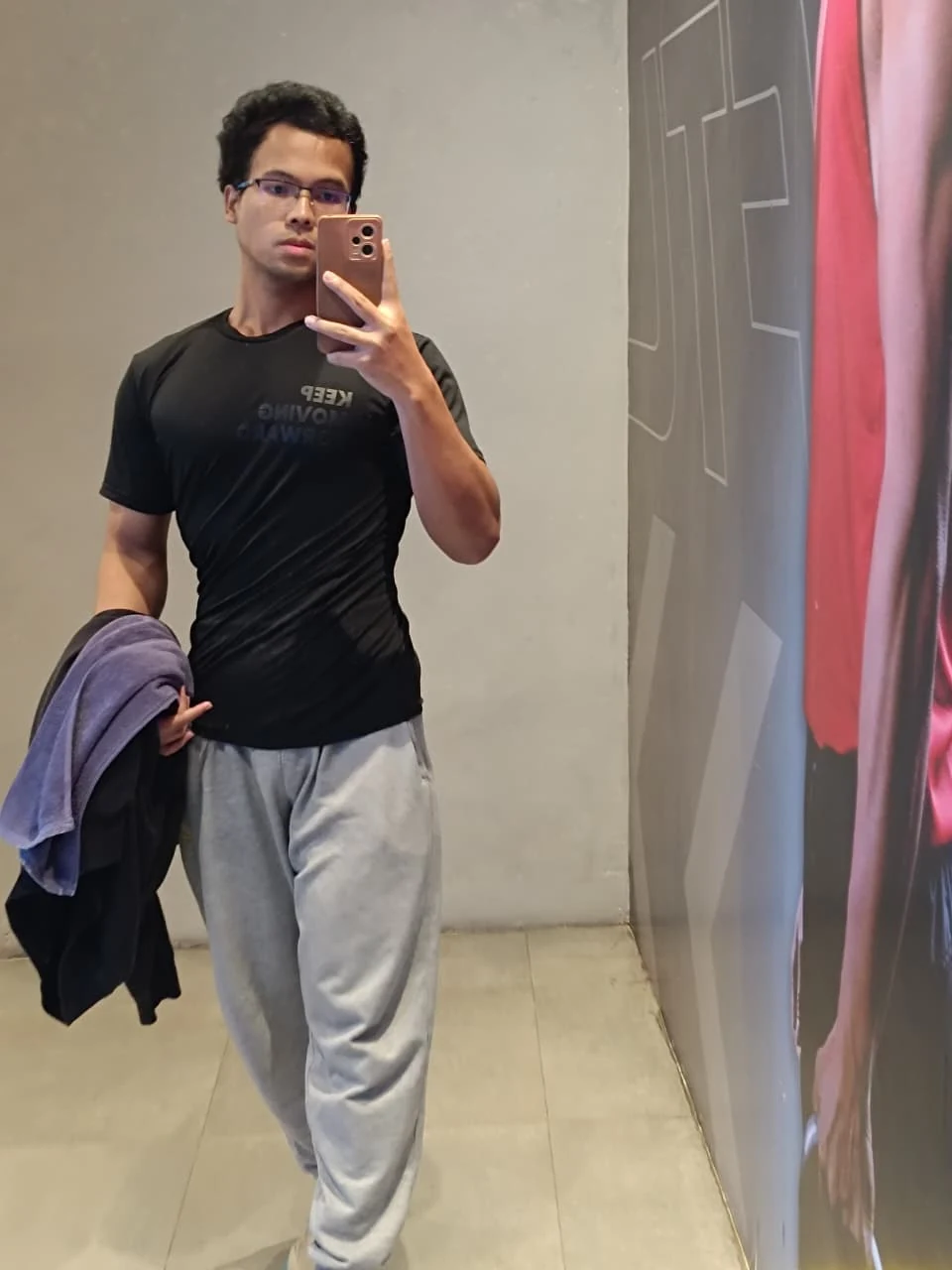
Ooo I also doing workout as my routine. I always go to the gym, Karate, Boxing, or morning run at 4 a.m. I enjoy exercising because it helps me think clearly. It is also good for brain health and concentration. I also keep a personal journal, where I record experiences, lessons, and small observations from everyday life—whether they come from training, reading, a project, or simply something that stayed in my mind that day.
Read the journal