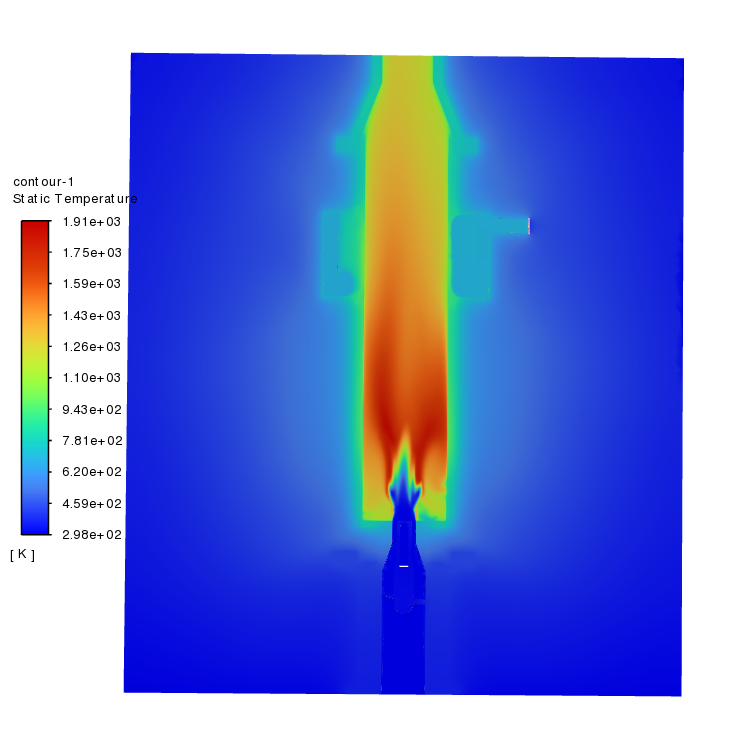
Conjugate heat transfer (CHT) is a simulation method that couples the interaction between solid materials and the working fluid. It operates by calculating heat loss, species concentrations, and temperatures at every point within the domain in real-time, based on the properties of the materials and fluids involved. This simulation approach is particularly well-suited for combustion applications, as the actual heat loss occurring is often unknown. CHT eliminates the need to manually model heat loss; instead, the simulation calculates it simultaneously with all other parameters.
This type of simulation is crucial for obtaining accurate combustion product results. When combined with a reactor network model, this simulation approach ensures that the results closely align with experimental data. The specific simulation I conducted focused on the combustion of pure ammonia at a Reynolds number (Re) of 20,000. The burner utilized was a diffusion-type burner equipped with an axial swirler (swirl number of 1.2). As shown in the images, this method yields more accurate temperature and species contours compared to adiabatic or other heat transfer models.
This simulation method can also be used to determine combustion stability limits—the operating range where stable combustion is maintained downstream of the injector. Different fuels exhibit distinct stability limits; in this research, the method was applied to determine the stability limits for ammonia and methane, yielding results that closely matched experimental data. I cannot present the specific results here, as the research is ongoing. However, the error margin; even when predicting combustion species, remains below 10%. Predicting species such as NOx, ammonia slip, H2, O2 slip, and various radical combustion products presents a significant simulation challenge; an error rate of 10% is considered excellent.
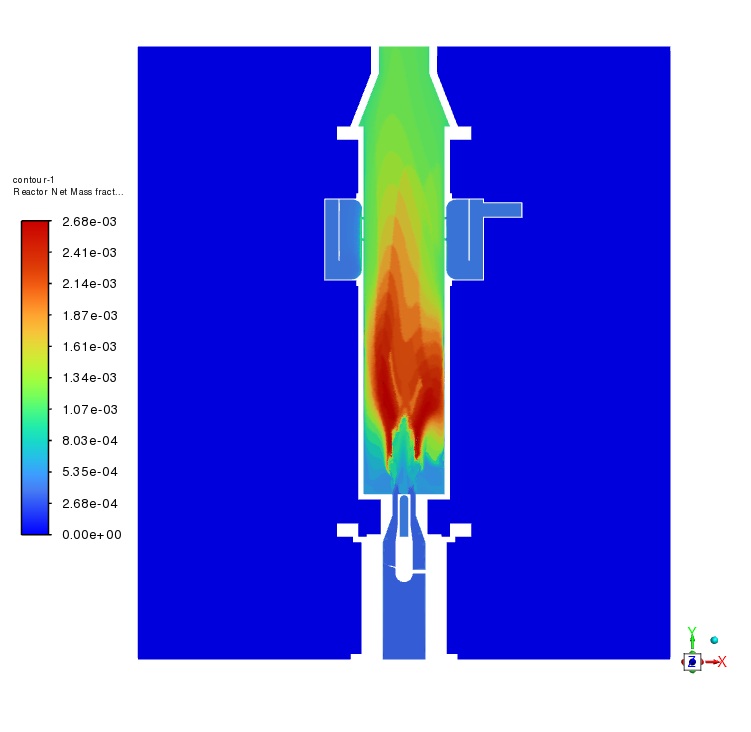
Figure 1. Example of CHT combustion result (mass fraction) for H2
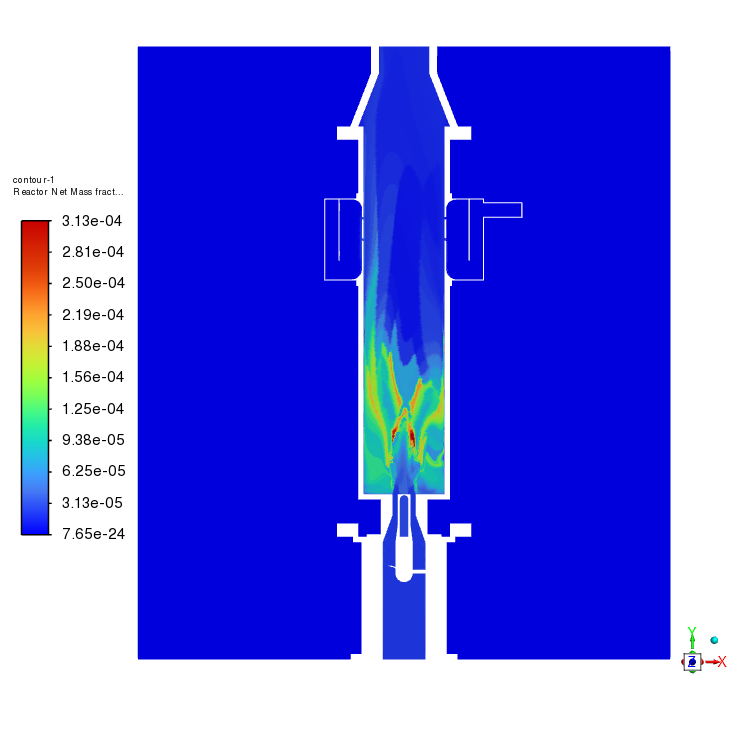
Figure 2. Example of CHT combustion result (mass fraction) for NOx
Simulations involving combustion and heat transfer should utilize this modeling approach. Relying on adiabatic conditions would result in significant discrepancies between simulation outcomes and experimental data. Simulations we conducted under adiabatic conditions showed that the maximum error relative to experimental data could exceed 200% (more than double the experimental value) for outlet temperatures, while simulation errors for species concentrations ranged from 80% to 300% of experimental values (an overprediction).
I will provide periodic updates on this.